kimbyrne
Stop a Self-Doubt Spiral by Choosing the Stretch Zone (copy) (copy)
"Do one thing every day that scares you." —Wise Person
There are seasons when it feels like nothing comes easily.
You want change.
You pray for momentum.
You try to stay hopeful.
But no matter how much effort you pour in, the results do not seem to come the way you thought they would. Meanwhile, it can look like other people are moving ahead with ease while you are still standing in the same place, wondering what you are missing.
That kind of discouragement can start a spiral. Not always loudly. Sometimes it sounds like, Maybe this just is what it is. Sometimes it looks like lowering the bar, numbing out, or quietly moving on before your heart has to face one more disappointment.
If you have felt that way, you are not alone. Not even a little.
And here is the good news: staying stuck is not a personality trait. It is often a pattern. And patterns can be changed.
One of the biggest differences between people who remain stuck and people who eventually create the life they long for comes down to this: how they respond to discomfort.
Why This Matters
When discomfort shows up, most of us have two choices.
We can retreat to the Comfort Zone.
Or we can take one small step into the Stretch Zone.
One feels like contracting. The other feels like an expansion.
Your comfort zone is familiar. Predictable. Safe. It is where your brain likes to keep you because safety feels efficient and protective. There is nothing wrong with craving safety. It is human.
But there is a cost to living there too long.
Because avoiding discomfort does not actually remove discomfort.
It just changes its shape.
You may avoid the discomfort of speaking up, but then you live with the discomfort of staying silent.
You may avoid the discomfort of trying something new, but then you carry the discomfort of wondering what if.
You may avoid the discomfort of setting a boundary, but then you sit with resentment, exhaustion, and self-betrayal.
That is the piece we often miss.
You do not get to have a life without discomfort.
You do get to choose which kind of discomfort you are willing to live with.
A Better Way to Think About It
The stretch zone is not some giant leap into chaos. It is simply the space just beyond what feels easy and familiar.
It might be one honest conversation.
One brave email.
One boundary.
One new decision.
One moment of saying what you really mean instead of what keeps everyone comfortable.
The stretch zone feels risky because it asks more of you. It asks you to tolerate uncertainty. It asks you to stay present while your mind offers every possible reason to turn back.
But it also does something your comfort zone cannot do.
It builds your courage.
Every time you take one step into discomfort and survive it, you gather evidence:
I can do hard things.
I can feel afraid and still move.
I can trust myself in unfamiliar territory.
And little by little, the very thing that used to stop you becomes the thing that strengthens you.
That does not mean discomfort disappears. It means your capacity grows.
You stop expecting ease to be the sign that you are on the right path.
And you recognize that discomfort is often the doorway to the exact growth you have been asking for.
The dream may be old, but that doesn’t mean it’s over
Years passed.
Life moved on, as it does. I stopped expecting certain dreams to come back around. I translated that longing for flight into other forms—success, growth, learning, responsibility. All worthy things. All meaningful in their own way.
But some desires don’t disappear just because we’ve become adults.
They wait.
They wait beneath the surface of ordinary days.
They wait in our restlessness.
They wait in the tug we feel when we see someone else doing something brave, embodied, joyful, or free.
And sometimes, what wakes them up is surprisingly small.
A conversation. A class. A book. A season of change. A question you can’t stop asking.
Or simply the realization that the old rules may not be true anymore.
Midlife has a way of changing the question
In midlife, many women notice where they have been living inside inherited limits.
Limits shaped by culture.
Limits handed down by family.
Limits reinforced by disappointment.
Limits we accepted because, at the time, they felt final.
But midlife invites a different kind of wisdom.
Not the wisdom of giving up.
The wisdom of looking again.
This season often asks:
What if the dream was never wrong?
What if the path was just incomplete?
What if what once wounded you is not the end of the story?
That is a very different question from, “Why didn’t this work back then?”
And it opens a very different door.
A new way to rise
Much later in life, I came across something unexpected: acroyoga.
I was intrigued at first because it was playful and physical and beautiful. But what truly caught my attention was this: it looked like flying.
Not the exact version I had imagined as a girl.
Not the same stage, the same structure, or the same dream shape.
But there it was.
Lift. Trust. Motion. Joy. Air beneath the body.
A new form. A familiar longing.
And that is what struck me most: sometimes the dream returns wearing different clothes.
Not as a repeat of the original plan, but as a reimagined invitation.
The older I get, the more I believe this is how grace often works.
Not by taking us backward, but by bringing us forward through a door we didn’t know to look for.
What grounded you may not define you
So many women enter midlife carrying old conclusions that were formed in tender years:
I’m too old.
I’m too late.
I’m not built for that.
I missed my chance.
That part of me is over.
Other women get to do that, not me.
But often those are not truths.
They are interpretations.
And interpretations can be reexamined.
That does not mean every dream unfolds exactly as we first imagined. It means we are allowed to revisit what matters to us. We are allowed to ask whether the limits we still live by are truly present-day realities—or simply outdated stories wearing grown-up clothes.
That distinction matters.
Because there is a difference between honoring reality and surrendering to a false boundary.
The courage of reimagining
Reimagining a dream takes courage.
Not because it always requires a dramatic leap, but because it asks us to become beginners again. To look a little foolish. To admit that something still matters to us. To tell the truth about what we miss, what we long for, what we are not yet done becoming.
That kind of honesty can feel vulnerable, especially in a culture that rewards certainty and self-containment.
But many of us are hungry for exactly this:
A life that feels inhabited.
A body that feels alive.
A dream that feels possible again, even if it now takes a different form.
This is one reason I care so deeply about intentional living. Not because it makes life neat or easy, but because it helps us notice where we have drifted away from what is still calling us.
A practical reflection
If something in you is stirring as you read this, here are a few questions to explore:
What dream did you quietly set down because it felt impractical, painful, or impossible?
What message did you absorb at the time about yourself?
Is that message actually true today?
Could the dream be asking to return in a new form?
Sometimes we don’t need to revive the exact original dream.
Sometimes we need to reclaim its essence.
Maybe you didn’t really lose a dream of performing.
Maybe you lost your connection to freedom, creativity, beauty, movement, expression, adventure, or visibility.
Those are not small things.
When we name the deeper longing, we often discover more than one way to honor it.
Midlife is not the end of becoming
I wish more women knew this deep in their bones:
You are not too old to begin differently.
You are not disqualified by the passage of time.
You are not behind because your life has taken the scenic route.
And you are not foolish for wanting more aliveness, more clarity, more beauty, more room to rise.
Midlife is not a closing argument.
It is often the season when we finally have enough life experience to stop confusing old pain with permanent truth.
Sometimes the dream that felt grounded was simply waiting for stronger roots.
And roots, as any gardener knows, are not the opposite of growth.
They are what make growth possible.
What becomes possible from here
Maybe your next step is not acrobatic at all.
Maybe it is signing up for the class.
Clearing the room.
Having the honest conversation.
Trying the thing that has lingered at the edge of your life for years.
Letting yourself be seen learning.
Letting yourself want what you want.
That counts.
The point is not to become someone else.
The point is to come home to a part of yourself you may have left waiting.
And from that place, surprising things can happen.
More questions to consider
1. What does it mean when a dream feels grounded in midlife?
It often means the dream got buried under disappointment, responsibilities, or old beliefs about what is realistic. A grounded dream is not always a dead dream. Sometimes it simply needs a new expression that fits the woman you are now.
2. How do I know if an old dream is still worth pursuing?
Pay attention to what continues to stir something in you. If the desire still carries energy, curiosity, grief, or longing, it may still matter. The question is not always whether to pursue it in its original form, but how to honor its deeper meaning in this season.
3. What is one practical step to reconnect with a forgotten dream?
Name the dream clearly, then identify the deeper need underneath it—freedom, creativity, purpose, movement, beauty, expression, or connection. From there, take one small action that brings that quality back into your life this month.
Final thoughts
If you have been living under an old sentence that says, that dream is over, I want to offer another possibility:
Maybe your dream is simply ready to be reimagined.
Not smaller.
Not safer.
Just truer.
So here is your invitation:
Choose one dream, one longing, or one forgotten part of yourself that still carries life. Then don’t ask whether it can return exactly as it once was, instead ask whether it can grow again from where you are now.
Because sometimes the most beautiful forms of flight begin when we stop asking to go back and start asking what is possible from here.
If you need some help clearing out or decluttering your dreams, this video series is a great way to start.
Let me know how you decide to fly.
About the Author
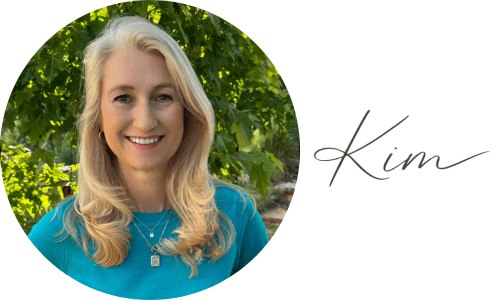
Kim Byrne
Kim Byrne is a life and leadership coach, speaker, and founder of Seeds to Stories. Drawing on her experience in software development, product marketing, entrepreneurship, and major life transitions, she helps women in midlife recognize the beliefs, expectations, and outdated roles keeping them stuck — and find the clarity and courage to create what comes next.
Through her coaching, speaking, and Essays from the Gap, Kim explores the human skills that help us live and lead with greater purpose: curiosity, courage, creativity, connection, and self-trust. Her signature Seeds to Stories approach helps people look beneath the surface, tend what matters, and turn small, intentional choices into meaningful change.
Kim lives in Colorado, loves dogs, tea (an occasional mocha), gardening metaphors, and conversations about what makes an ordinary life extraordinary.
SUNDAY SEEDS
The work of knowing yourself. The courage to act on it.
One bi-weekly reflection, on the gap between knowing and doing — and what it actually takes to close it.
More from Seeds to Stories
SUNDAY SEEDS
The work of knowing yourself. The courage to act on it.
One bi-weekly reflection, on the gap between knowing and doing — and what it actually takes to close it.
How will you start your story today?